

• Skip to primary navigation
  • Skip to main content
  • Skip to footer

TRC57 Speaker Series

an Indigenous learning series

  • Home
  • All Seasons
    • Season 6
    • Season 5
    • Season 4
    • Season 3
    • Season 2
    • Season 1
  • About TRC57 Speaker Series

Kiera Ladner

March 3, 2026 By Carlos Acosta

Dr. Kiera Ladner is Canada Research Chair in Miyo we’citowin, Indigenous Governance and Digital Sovereignties and an Associate Professor in the Department of Political Studies at the University of Manitoba. Her work focuses on Indigenous governance, treaty constitutionalism, and the political relationships between Indigenous nations and the Canadian state. 

Working across political science, law, and Indigenous studies, Dr. Ladner’s scholarship examines how Indigenous nations continue to renew their own political traditions and governance systems despite the ongoing constraints of colonial institutions. Her work invites careful reflection on self-determination, resurgence, and the responsibilities that arise when multiple legal and political orders coexist on the same lands. 

Dr. Ladner is the founder of Mamawipawin, a collaborative research initiative that works alongside Indigenous communities to support community-driven research and governance renewal. Through this work, she emphasizes relational accountability, community knowledge, and governance practices grounded in lived experience. 

She has co-edited several influential collections, including This Is an Honour Song: Twenty Years Since the Blockades(with Leanne Betasamosake Simpson) and Surviving Canada: Indigenous Peoples Celebrate 150 Years of Betrayal (with Myra J. Tait).  

Through her research, teaching, and community partnerships, Dr. Ladner contributes to ongoing conversations about Indigenous resurgence and the possibilities for political relationships rooted in responsibility, reciprocity, and respectful coexistence on these lands.
January 14, 2026 By #57@NLPS

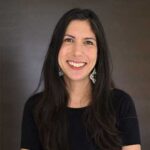
Dr. Gina Starblanket is an Associate Professor in the School of Indigenous Governance at the University of Victoria. She is Cree/Saulteaux and a member of the Star Blanket Cree Nation in Treaty 4. Dr. Starblanket’s writings address Indigenous-settler relations, Indigenous movements towards political transformation, and Indigenous feminisms. She is co-editor of NAIS, the journal of the Native American and Indigenous Studies Association and her publications include Making Space for Indigenous Feminisms, 3rd ed. (Fernwood Press, 2024), Storying Violence: Unravelling Colonial Narratives in the Stanley Trial (ARP Press, 2020), and Visions of the Heart: Issues Involving Indigenous Peoples in Canada, 5th and 6th eds. (OUP, 2019 & 2025).
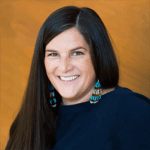
Dr. Heidi Kiiwetinepinesiik Stark is a Turtle Mountain Anishinaabekwe and Associate Professor in the School of Indigenous Governance at the University of Victoria, where she also directs the Centre for Indigenous Research and Community-Led Engagement (CIRCLE). Her work centers Indigenous law, governance, and treaty relations, with a strong foundation in Anishinaabe political thought and legal traditions.

Dr. Stark’s scholarship explores how Indigenous peoples have long maintained their own political authority and legal orders, despite ongoing efforts by settler states to limit or criminalize Indigenous sovereignty. Her research attends closely to treaty-making, consent, and gendered violence within legal systems, offering relational approaches to governance grounded in responsibility, accountability, and renewal.

A 2024 inductee into the Royal Society of Canada’s College of New Scholars, Dr. Stark’s teaching and writing support Indigenous resurgence by reconnecting law and governance to land, relationships, and enduring Indigenous political traditions.

January 14, 2026 By #57@NLPS

Dr. Aaron Mills is Anishinaabe and a member of Couchiching First Nation. He is an Assistant Professor and Canada Research Chair (Tier 2) in Indigenous Constitutionalism and Philosophy in the Faculty of Law at McGill University. His work is rooted in Indigenous legal traditions and explores how law, governance, and responsibility are lived through relationships—with one another, with the land, and across generations.

Drawing on more than fifteen years of learning with Anishinaabe elders, Dr. Mills’ work reflects a deep commitment to relational accountability and to the renewal of Indigenous constitutional traditions as living systems of law. He works closely with Indigenous communities, knowledge holders, and organizations to support Indigenous-led law revitalization and governance initiatives.
Through his teaching, writing, and public engagement, Dr. Mills invites careful reflection on how Indigenous philosophies of law challenge state-centred and individualistic frameworks. His work encourages Indigenous peoples and settlers alike to rethink law, belonging, and coexistence in ways that honour Indigenous jurisdiction, consent, and enduring relationships.

Dr. Mills has received numerous academic honours, including SSHRC, Pierre Elliott Trudeau Foundation, Vanier, and Fulbright awards, recognizing his contributions to Indigenous legal resurgence and transformative dialogue in Canada.

January 12, 2026 By #57@NLPS

Dr. James Tully is Emeritus Professor of Political Science, Law, Indigenous Governance and Philosophy at the University of Victoria, and one of Canada’s most respected political philosophers. His work has influenced constitutional theory, legal pluralism, civic freedom, and the understanding of Indigenous–settler relations through decades of scholarship and engagement.

After completing a BA at the University of British Columbia and a PhD at the University of Cambridge, Dr. Tully taught at McGill University and the University of Toronto before joining UVic, where he helped shape cross-disciplinary programs at the intersection of political science, law, and Indigenous governance.

Dr. Tully’s scholarship emphasizes dialogical and relational approaches to constitutionalism and democratic citizenship, inviting political communities to think and act differently about freedom, recognition, and coexistence. He has been recognized as a Fellow of the Royal Society of Canada and an Emeritus Fellow of the Trudeau Foundation, and his contributions to political thought have garnered major awards including the Killam Prize in the Humanities.

As co-editor of Resurgence and Reconciliation: Indigenous–Settler Relations and Earth Teachings, Dr. Tully’s work bridges theory and practice, calling attention to the ongoing responsibilities of citizens in building just, respectful, and relational futures.

January 12, 2026 By #57@NLPS

Dr. Michael Asch is Professor Emeritus of Anthropology at the University of Alberta and one of Canada’s most influential scholars on treaties, Indigenous–settler relations, and reconciliation. Over several decades, his work has shaped public and academic understanding of treaties not as historical transactions, but as living agreements that continue to ground Canada’s legitimacy on these lands.

Dr. Asch’s scholarship focuses especially on the treaty relationships negotiated around the time of Confederation and on the responsibilities settlers inherited through those agreements. Writing as a settler scholar, he is explicit about his own position and directs his work toward other settlers, asking what it means to live honourably on lands we were granted permission to share.

Widely respected for his clarity, integrity, and careful engagement with Indigenous teachings and historical records, Dr. Asch has contributed significantly to conversations about reconciliation that centre consent, shared futures, and the ethical obligations that flow from treaty relationships.

January 8, 2026 By Carlos Acosta

Dr. John Borrows is Anishinaabe and a member of the Chippewas of Nawash Unceded First Nation. He is the Loveland Chair in Indigenous Law at the University of Toronto Faculty of Law and one of Canada’s leading thinkers on Indigenous law, constitutionalism, and Indigenous–settler relationships.

John Borrows’ work is grounded in Anishinaabe legal traditions and teachings and explores how Indigenous laws continue to live, adapt, and guide relationships today. Through his scholarship, he challenges the idea that Canadian law can be fully understood without Indigenous law, and he invites a deeper reckoning with how legal systems shape relationships between peoples and with the Land.

Widely respected as a teacher, writer, and mentor, Borrows’ work bridges Indigenous law, constitutional law, and political theory while remaining accountable to Indigenous communities and knowledge systems. His writing emphasizes law as a living practice—carried through stories, responsibilities, and relationships rather than confined to statutes or courts.

John Borrows has authored numerous influential books and articles, including Canada’s Indigenous Constitution and Law’s Indigenous Ethics, and his contributions have shaped legal education, public policy, and conversations about reconciliation and resurgence across Canada. His work continues to offer pathways toward more just, relational, and grounded futures.

December 8, 2024 By georgep

Salma Monani is a leading scholar in ecocinema studies and a professor of environmental humanities at Gettysburg College. Her research explores the intersections of cinema, ecology, and culture, with a focus on Indigenous media.

Salma’s work highlights how Indigenous films engage with ecological themes and decolonial practices, offering critical perspectives on environmental justice and cultural resilience. A prolific writer and editor, she has co-edited books like Ecocinema Theory and Practice and continues to shape discussions on the transformative power of environmental storytelling in cinema.

One of the foremost Métis media artists practising in Canada today, Terril Calder is a multi-disciplinary creator born in Fort Frances, Ontario, and currently living in Toronto. Calder’s Métis lineage is from the Red River Settlement and the Orkney Cree Métis. While her current practice is focused on stop-motion projects, which she writes, directs, crafts and animates, Calder also has an extensive background in performance art, visual art and media art.

Calder attended the University of Manitoba’s Fine Arts Program, graduating with a major in Drawing and a minor in Film. While in Winnipeg, she exhibited her multi-media and performance artwork with the influential Student Bolshevik group and was a member of Video Pool. After moving to Toronto following her studies, Calder became a founding member of the 7a*11d International Festival of Performance Art, where she curated visual and performance art exhibitions. Since the 1990s, Calder has lectured and taught art at organizations such as the National Ballet School of Canada, the Toronto District School Board, Art in the Park, the University of Manitoba, Indigenous Roots and imagineNATIVE, and in numerous Indigenous communities in Canada.

Calder’s films have been screened at major festivals and venues across Canada and internationally, including the Toronto International Film Festival, the Sundance Film Festival, Rotterdam, the Berlinale, the Tampere Film Festival and imagineNATIVE. In 2019, the Winnipeg Film Group presented the first retrospective of her work, and in 2020 she received her first film festival retrospective, at the Ottawa International Animation Festival. Calder’s notable film honours include Best Experimental Film from imagineNATIVE for The Gift, an Honourable Mention at the Sundance Film Festival, a Genie Award nomination for Best Animation and a Special Mention at the Berlinale (Generation 14+). Her films Choke (2011) and Snip (2016) were both selected for TIFF’s annual list of Canada’ Top Ten Shorts. Additional awards include best animation prizes at the Dreamspeakers Festival, the Winnipeg Aboriginal Film Festival, the Indianer Inuit film festival in Stuttgart, and the Intercontinental Biennale of Indigenous Art in Piura, Peru, as well as a Pixie Award for animation. In 2016, Calder won the prestigious K.M. Hunter Artist Award for her contributions to the media arts.

In addition to her most recent animated project, Meneath: The Hidden Island of Ethics, Calder is co-creating a stop-motion video game with Meagan Byrne, providing animation for Alanis Obomsawin’s Green Horse project, and creating an animated art installation with the Glenn Gould Foundation in celebration of Obomsawin’s lifetime achievement award.

December 8, 2024 By georgep

Douglas S. White, known by his Coast Salish name Kwul’a’sul’tun and his Nuu-chah-nulth name Tlii’shin, is a distinguished lawyer, politician, educator, and negotiator from the Snuneymuxw First Nation in Nanaimo, British Columbia. White served as Chief of the Snuneymuxw First Nation from 2009 to 2014 and as a councillor from 2015 to 2020. In 2022, he was appointed Special Counsel to the Premier of British Columbia on Indigenous Reconciliation, providing strategic guidance on critical issues affecting Indigenous communities, including policy development and the implementation of the Declaration on the Rights of Indigenous Peoples Act in the province. He also chairs the BC First Nations Justice Council and co-chairs the Provincial Advisory Committee for Indigenous and Specialized Courts and Related Initiatives. White’s extensive experience and unwavering commitment to Indigenous justice have made him a leading advocate for the recognition and implementation of Indigenous rights at both national and international levels.

Jennifer Kramer is an associate professor of anthropology and curator of the Pacific Northwest at the University of British Columbia’s Museum of Anthropology (MOA). She earned her Ph.D. in Cultural Anthropology from Columbia University in 2003. Since 1994, Dr. Kramer has collaborated with the Nuxalk Nation of Bella Coola, British Columbia, focusing on cultural revitalization, repatriation, and Indigenous-led education.

Her research interests encompass Northwest Coast visual culture, art market economies, identity production, representation, repatriation, cultural property, Indigenous cultural tourism, Indigenous modernity, and collaborative museology. Dr. Kramer has curated several notable exhibitions, such as “Kesu’: The Art and Life of Doug Cranmer” and “Layers of Influence: Unfolding Cloth across Cultures.” She co-edited Native Art of the Northwest Coast: A History of Changing Ideas, which received the 2015 Canada Prize in the Humanities.

December 8, 2024 By georgep

Haa’yuups, Ron Hamilton is a distinguished Nuu-chah-nulth artist, historian, and cultural knowledge holder from the Hupacasath First Nation in British Columbia. Born on February 11, 1948 in Ahaswinis near Port Alberni, he has dedicated his life to Nuu-chah-nulth culture. Haa’yuups work is multidimensional sculpture, painting, dance, song, writing, and regalia creation, all reflecting the ceremonial life of his people. Notably, Haa’yuups served as co-curator for the renovation of the Northwest Coast Hall at New York City’s American Museum of Natural History, ensuring respectful and accurate representation of Indigenous cultures. He has also collaborated with institutions like the National Museum of the American Indian and the British Museum, contributing his expertise to the curation and interpretation of Indigenous artifacts.

Beyond his artistic contributions, Haa’yuups is a respected knowledge keeper, actively involved in cultural practices and ceremonies, and committed to educating both Indigenous and non-Indigenous communities about Nuu-chah-nulth heritage. His enduring efforts have significantly enriched the understanding and appreciation of Indigenous cultures on a global scale.

To learn more about our esteem speaker, please visit: https://nuuchahnulthlivingarchive.com/people/ḥaayuups-ron-hamilton

December 8, 2024 By georgep

David A. Neel, carver, jeweller, painter, printmaker, writer, and photographer, comes from a family of traditional Kwakwa̱ka̱’wakw artists, including Dave Neel Sr., Ellen Neel, Mungo Martin, and Charlie James. In addition to apprenticing with carvers in Alert Bay, he received training in writing and photography from the University of Kansas and Mount Royal College in Alberta. He is the author of Our Chiefs and Elders: Words and Photographs of Native Leaders (1992) and The Great Canoes: Reviving a Northwest Coast Tradition (1995). He is dedicated to the promotion and preservation of Kwakwa̱ka̱’wakw traditional art and culture.

December 8, 2024 By georgep

Éléna Choquette is an associate professor in the Department of Social Sciences at the Université du Québec en Outaouais. She earned her PhD in Political Science from the University of British Columbia, where her research focused on the liberal tradition’s relationship with territorial expansion, immigration, and settlement in British Dominions, including Canada, from the 19th century to the present. Following her doctoral studies, she held a postdoctoral fellowship at the University of Cambridge.

Her scholarly work examines the interplay between territoriality and exclusion in the history of political ideas, with a particular interest in the territorial claims of states and societies stemming from colonization, such as Quebec, Canada, and the United States. Adopting a historical, comparative, and critical approach, she evaluates the legacy of ideas that have legitimized these territorial claims, addressing contemporary issues of land sharing and exploitation. Her research has been published in journals including the Canadian Journal of Political Science, Settler Colonial Studies, and the Journal of Political Ideologies. In 2024, she authored Land and the Liberal Project: Canada’s Violent Expansion, which explores the “improving” ideas that informed Canada’s expansion from coast to coast, challenging assumptions about Canadian sovereignty.

December 8, 2024 By georgep

Marie Battiste is a Mi’kmaw educator and scholar from Potlotek First Nation in Nova Scotia. She holds a Master of Education in Administration and Social Policy from Harvard University (1974), and a Doctor of Education in Curriculum and Teacher Education from Stanford University (1984). As a professor in the Department of Educational Foundations at the University of Saskatchewan, Dr. Battiste has dedicated her career to advancing Indigenous knowledge and decolonizing education. She has authored and edited several influential works, including Decolonizing Education: Nourishing the Learning Spirit and Reclaiming Indigenous Voice and Vision. Her contributions have been recognized with numerous honors, such as being named an Officer of the Order of Canada and a Fellow of the Royal Society of Canada.

Dr. Battiste’s work emphasizes the importance of Indigenous languages, decolonization, and education. She has contributed to the creation of numerous Indigenous educational organizations, including the Mi’kmaw educational authority Mi’kmaw Kina’matnewey. In 2021, Dr. Battiste joined Cape Breton University as Special Advisor to the Vice President Academic and to Unama’ki College on decolonizing the academy.

Throughout her career, Dr. Battiste has been a leading advocate for the protection of Indigenous knowledge and the decolonization of education systems, working tirelessly to promote social justice and cognitive justice through the integration of diverse knowledge systems and languages. She and her husband, Sa’ke’j James Youngblood Henderson, have three children and a grandson.

Sa’ke’j James Youngblood Henderson is distinguished international human rights lawyer and an authority on protecting Indigenous heritage, knowledge, and laws. He was among the strategists and drafters of the United Nations Declaration on the Rights of Indigenous Peoples. Throughout his lengthy career, Henderson has received numerous accolades, including the Indigenous Peoples’ Counsel award in 2005, the National Aboriginal Achievement Award for Law and Justice in 2006, and an honorary doctorate from Carleton University in 2007. In 2013, he was named a Fellow of the Royal Society of Canada.

December 8, 2024 By georgep

Chelsey Geralda Armstrong is a historical ecologist and archaeologist specializing in the historical ecology of land use and colonialism in the Pacific Northwest. She is an assistant professor in Indigenous Studies at Simon Fraser University and an associate member of the School of Resource and Environmental Management. As director of the Historical-Ecological Research Lab (HER Lab), Dr. Armstrong conducts community-based research in Ts’msyen and Gitxsan territories, focusing on traditional resource management, ancient forest gardens, and Indigenous data sovereignty. She has published widely in international journals and serves as an associate editor for People and Nature and reviews editor for Human Ecology.

Dr. Armstrong’s work highlights the enduring role of Indigenous stewardship in shaping ecosystems. In 2024, she co-authored a study demonstrating that Indigenous peoples in present-day British Columbia cultivated beaked hazelnuts over 7,000 years ago, challenging outdated views of pre-colonial land use. Through collaborative, action-oriented research, she seeks to address the impacts of colonialism and advocate for Indigenous land rights and sovereignty.

Nancy J. Turner is a renowned ethnobotanist and Distinguished Professor Emerita from the University of Victoria. With over 50 years of work alongside First Nations Elders and cultural specialists in northwestern North America, she has helped document and promote traditional knowledge of plants, Indigenous foods, and medicines. Nancy has authored over 30 books, including Ancient Pathways, Ancestral Knowledge and The Earth’s Blanket, and contributed more than 150 papers and chapters.
Her work has earned numerous accolades, including membership in the Order of British Columbia (1999) and the Order of Canada (2009), as well as honorary degrees from several universities. Nancy’s contributions continue to illuminate the rich interplay between ethnobotany, ecological wisdom, and Indigenous land rights.

December 8, 2024 By georgep

Dr. Georgina Martin, of Secwepemc ancestry and a member of the Williams Lake First Nation, is a professor in the Department of Indigenous/Xwulmuxw Studies at Vancouver Island University. With a rich background in federal and provincial government roles, she has extensive experience in community health, land coordination, and equity initiatives. Her PhD research, Drumming My Way Home: An Intergenerational Narrative Inquiry About Secwepemc Identities, explored the stories of three generations, demonstrating how storytelling fosters stronger identities and opens new pathways for pedagogy and philosophical understanding across disciplines.

Dr. Martin’s research focuses on intergenerational trauma, cultural identity, Indigenous self-determination, education, and voice. She is dedicated to reclaiming space for Indigenous peoples by integrating respectful, relevant content into her curriculum and sharing her lived experiences through public lectures that address historical injustices and inspire reconciliation.

December 8, 2024 By georgep

Chris Arnett is a registered member of Ngāi Tahu Whānui of Murihiku, Te Wai Pounamu, and a descendant of British and Scandinavian ancestors. Chris is also an archaeologist, researcher, and writer who lives on Salt Spring Island, British Columbia. He has lectured in anthropology and archaeology at the University of British Columbia, the University of Victoria, and Vancouver Island University. Among his publications are They Write Their Dreams on the Rock Forever: Rock Writings of the Stein River Valley, British Columbia (co-authored with Annie York and Richard Daly), The Terror of the Coast: Land Alienation and Colonial War on Vancouver Island and the Gulf Islands (1849–1863 and editor of Two Houses Half Buried in the Sand:  Oral Traditions of the Hul’q’umi’num’ Coast Salish of Kuper Island and Vancouver Island (author, Beryl Mildred Cryer).

November 14, 2023 By georgep

Dr. Fraser is a Māori scholar from Aotearoa (New Zealand) teaching at the University of Northern British Columbia.  Her tribal affiliations are Ngāti Haka/Patuheuheu, Ngāti Koura, and Ngāti Pani from the Tūhoe Nation. The other affiliation is Ngāti Ranginui. Dr. Fraser is a full Professor in the School of Education. She is the first female and Indigenous Chair for the School of Education, an Adjunct Professor in the School of Nursing, Department of First Nations Studies, and an Adjunct Professor at Simon Fraser University, Faculty of Education. She was a former Acting Chair for the School of Nursing, and she is currently Acting Chair/Department of First Nations Studies. Dr. Fraser is a Fellow of Te Mata Ō Te Tau (The Academy for Research and Scholarship at Massey University, and an Associate Fellow/Adjunct at Te Wānanga ō Awanuiarangi, New Zealand.

In her previous role, she was the ActNow British Columbian (BC) Initiatives Research Manager and the Cultural Advisor to the National Collaborating Centre for Aboriginal Health, Centre of Excellence for Adolescence and Children with Special Needs, and the Network Environments for Aboriginal Research BC. Dr. Fraser has a Nursing background, Early Childhood Education, Master of Educational Leadership and Administration, (Simon Fraser University, Canada), and a Doctor of Philosophy in Educational Studies from the (University of British Columbia, Canada).

She, along with colleagues provincially, nationally, and internationally have published articles and chapters in Early Childhood Education, First Nations, and Indigenous Knowledge(s), Mātauranga Māori and Global Knowledges, Indigenous Technology and Education, Health and Wellness, and the Mindfulness through Indigenous practices, and recently co-written and submitted an article to International Journal of Qualitative Methods, and recently published. I Am Not Represented Here: Cultural Frameworks and Indigenous Methodology Primer for Postsecondary Settings. She is the co-editor of Living Indigenous Leadership: Native Narratives on Building Strong communities. Dr. Fraser is the only International academic external examiner/translator for dissertations written in Te Reo Māori (Māori Language) for New Zealand institutions. She also supervises students/ practitioners and evaluates He Waka Hiringa Applied Indigenous Knowledge Masters’ degree at Te Wānanga ō Aotearoa, an examiner for Waikato University (NZ), Victoria University (NZ) as well, she is a stakeholder on the board of Te Wānanga o Aotearoa University, New Zealand.

November 14, 2023 By georgep

Larry Chartrand is a citizen of the Métis Nation (Michif), professor emeritus in the Faculty of Law at the University of Ottawa, and a former director of the Indigenous Law Centre at the University of Saskatchewan.

November 14, 2023 By georgep

Shalene Wuttunee Jobin is a Cree and Métis scholar and a citizen of Red Pheasant Cree First Nation, Treaty 6. As of June 2023, she took on the role of VP, Academic at First Nations University of Canada moving from an associate professor of Indigenous studies and Canada Research Chair in Indigenous Governance at the University of Alberta. She is the founding director of the Indigenous Governance and Partnership program, and a co-founder of the Wahkohtowin Law and Governance Lodge.

November 14, 2023 By georgep

Nicola Levell is a curator and an associate professor of museum and visual anthropology at the University of British Columbia. She is the author of The Marvellous Real: Art from Mexico, 1926–2011 and editor of Bodies of Enchantment: Puppets from Asia, Europe, Africa and the Americas, both publications stemming from exhibitions she curated. She has held curatorial positions at the Horniman Museum in London and the Royal Pavilion Art Gallery and Museums in Brighton.

November 14, 2023 By georgep

Bruce Granville Miller is a Professor of Sociocultural Anthropology at UBC. Much of his ethnographic work has been with the Coast Salish of BC and Washington State and he’s served on a number of occasions as an expert witness in Indigenous litigation: United States v Washington (a treaty case) and, the Radek case before the BC Human Rights Tribunal, (a precedent-setting case regarding Aboriginal presence in public spaces and racial profiling). He serves as a member of the board of the Museum of Vancouver and chair of the collections committee, which initiated a progressive program of repatriation to First Nations.

November 14, 2023 By georgep

Christopher B. Teuton (Cherokee Nation) is Professor and Chair of the Department of American Indian Studies at the University of Washington-Seattle, where he is a scholar of Indigenous oral and written literary studies, community-based cultural heritage and language revitalization work, and fieldwork exploring the perpetuation of Indigenous arts and epistemologies. Teuton is co-editor and co-author of the award-winning Reasoning Together: The Native Critics Collective (University of Oklahoma Press, 2008), author of Deep Waters: The Textual Continuum in American Indian Literature (University of Nebraska Press, 2010), and author of Cherokee Stories of the Turtle Island Liars’ Club (University of North Carolina Press, 2012), a collection of forty interwoven stories, conversations, and teachings about Western Cherokee life, beliefs, history, and the art of storytelling. In 2013 Cherokee Stories of the Turtle Island Liars’ Club received an American Book Award by the Before Columbus Foundation. His recently published book, Cherokee Earth Dwellers: Stories and Teachings of the Natural World (University of Washington Press, 2023), co-authored with the late Cherokee Nation leader Hastings Shade, articulates a Cherokee view of nature grounded in Cherokee names for that world as well as the stories and reflections of the elders who know it. Teuton is a citizen of the Cherokee Nation.

November 14, 2023 By georgep

Dr. Sarah Marie Wiebe grew up on Coast Salish territory in British Columbia and is an Assistant Professor in the School of Public Administration at the University of Victoria and an Adjunct Professor at the University of Hawai’i, Mānoa with a focus on community development and environmental sustainability. She is a Co-Founder of the Feminist Environmental Research Network and author of recently published Life against States of Emergency: Revitalizing Treaty Relations from Attawapiskat. Her first book Everyday Exposure: Indigenous Mobilization and Environmental Justice in Canada’s Chemical Valley won the Charles Taylor Book Award and examines policy responses to the impact of pollution on the Aamjiwnaang First Nation’s environmental health. At the intersections of environmental justice and public engagement, her teaching and research interests emphasize interpretive policy analysis, community-engagement and deliberative democracy. For more about her scholarship and mixed media storytelling projects see: www.sarahmariewiebe.com

November 14, 2023 By georgep

Dr. Carole Blackburn is an anthropologist interested in the evolving dimensions of Indigenous rights in Canada. She earned her PhD in Anthropology from Stanford University and was a Research Associate for the Royal Commission on Aboriginal Peoples. Her work lies at the intersection of a number of disciplinary trajectories, including socio-legal studies, Indigenous studies and transitional justice. Dr. Blackburn is particularly concerned with if and how treaty making in Canada can be a mechanism of reconciliation. Presently it is not. While the Truth and Reconciliation Commission on Indian Residential Schools identifies the treaty relationship as key to meaningful reconciliation, Carole explores the challenges faced by First Nations whose ideas about how and why a treaty can reconcile their relationship with the state are quite different from those reflected in government policy.

November 14, 2023 By georgep

Sam George is a Squamish Elder and a survivor of the Canadian Indian Residential School system. A retired longshoreman and semi-retired drug and alcohol counsellor, Sam now works as an educator with the Indian Residential School Survivors Society and speaks with students and community groups about his experiences.

Jill Goldberg is a writer and an instructor of creative writing and literature at Langara College in Vancouver. She teaches the Writing Lives course in which students interview residential school Survivors in order to collaborate with them to write their memoirs.

November 14, 2023 By georgep

Heather Menzies is an award-winning author, activist, and adjunct research professor in the School of Indigenous and Canadian Studies at Carleton University. In 2013, she was appointed to the Order of Canada for her contributions to public discourse. Most recently, she collaborated with the Nishnaabeg at Stoney Point to produce Our Long Struggle for Home: The Ipperwash Story. She has won two book awards and one magazine award, and two of her books appeared on the Globe and Mail’s top 100 books of the year list. Heather, who lives on the unceded Snuneymuxw territory in British Columbia is a seeker, trying to name what’s behind people’s sense of disconnection, and what’s required for reconnection, reconciliation and healing.

November 14, 2023 By georgep

Dr. Richard Atleo whose Nuu-Chal-nulth name is Umeek, is a hereditary chief and author. Dr. Atleo has published two seminal books: Tsawalk: A Nuu-Chal-Nuth Worldview (2005) and Principles of Tsawalk: An Indigenous Approach to Global Crisis (2012) rooted upon a Nuu-Chal-nulth concept of “tsawalk,” oneness, the interdependence of all things, and for fostering our respectful relationship and negotiation with it.

Dr. Atleo has made significant contributions throughout his career, including the establishment of the First Nations Studies Department at Vancouver Island University where he also taught. He has also taught at several other esteemed institutions, including the Universities of Victoria, Manitoba, Simon Fraser, and UBC. Dr. Atleo also has a background in the K-12 public education sector, having worked as an elementary school teacher, principal, and assistant superintendent of education.

Recognized for his commitment to equity and inclusion, Dr. Atleo was honored with the Equity Award by the Canadian Association of University Teachers. He played an instrumental role in the Equity Committee’s establishment and operation since its inception. His influence extends beyond academia, as evidenced by his involvement as co-chair of the Scientific Panel for Sustainable Forest Practices in Clayoquot Sound and his membership on the board of Ecotrust Canada.

November 14, 2022 By georgep

Sigrid Lien (b. 1958) is Professor of Art History and Photography Studies, at the Department of Linguistic, Literary and Aesthetic Studies, University of Bergen. Project leader for the Norwegian team in the HERA-project PhotoClec (Museums, Colonial past and Photography) 2010-2012, and for the project “Negotiating History: Photography in Sámi Culture”, funded by the Norwegian Research Council (2014-2017). Lien has published extensively on nineteenth century as well as modern and contemporary photography. Recent publications include the edited volume Uncertain Images: Museums and the Work of Photographs, Ashgate 2014, (with Elizabeth Edwards); the authored volume, Pictures of Longing. Photography in the History of the Norwegian U.S.-migration, University of Minnesota Press 2018, and the edited volume Contact Zones. Photography, Migration and Cultural Encounters in the US (with Justin Carville), Leuven University Press, 2020.

Hilde Wallem Nielssen is Professor of Intercultural Studies at the Department of Pedagogy, Religion and Social Studies/Western Norway University of Applied Sciences, Bergen, Norway, and PhD in social anthropology. Nielssen has published extensively on issues such as ritual aesthetics and practice, critical museology and museum exhibitions, and indigenous photography. Her research interests include photography and visual practices, critical museology, representation, colonialism and decolonisation. Together with Sigrid Lien she has published Museumsforteljingar. Vi og dei andre (Museum Stories. We and the Others 2016) and Colonial Legacies and Decolonial Activism in Indigenous Photography (2021).

November 14, 2022 By georgep

Carol Lynne D’Arcangelis is an associate professor of gender studies at Memorial University, where she received a 2019 Dean’s Award for Teaching Excellence in the Faculty of Humanities and Social Sciences. Since 2005, she has been a white settler member of No More Silence, a Toronto-based grassroots network dedicated to raising awareness about missing and murdered Indigenous women, girls, and two-spirit people. She has published on Indigenous–non-Indigenous solidarity, white settler feminism, and decolonial feminism in journals that include Cultural Studies ↔ Critical Methodologies, Atlantis: A Women’s Studies Journal, Canadian Woman Studies, and the German journal Peripherie.

November 14, 2022 By georgep

Adam J. Barker is a settler Canadian from the territories of the Haudenosaunee and Anishinaabe people and an adjunct research professor with the Indigenous and Canadian Studies Program at Carleton University. He has published research on settler colonial theory and practice, decolonial activism, and Indigenous-settler relations in Canada.

November 14, 2022 By georgep

Solen Roth is a cultural anthropologist currently working at the service design cooperative Meilleur Monde. She also teaches at the Université de Montréal School of Design, where she is part of Tapiskwan, a participatory-action research project in collaboration with Atikamekw artists and knowledge holders. From 2010 to 2016, she co-chaired the Commodification of Cultural Heritage working group for the Intellectual Property Issues in Cultural Heritage research project at Simon Fraser University.

November 14, 2022 By georgep

Allan Downey is Dakelh, Nak’azdli Whut’en, and an associate professor in the Department of History and Indigenous Studies Program at McMaster University. Allan was a recent recipient of a Fulbright Fellowship to Columbia University where he continued to advance his research focused on the history of Indigenous nationhood, sovereignty, and self-determination. Beyond his research and teaching activities, one of Allan’s greatest passions is working with Indigenous youth and he volunteers for several Indigenous communities and youth organizations throughout the year.

November 14, 2022 By georgep

Darwin Hanna, a Nlha7kapmx and a Lytton Indian Band member, recently completed a law degree at the University of British Columbia. Mamie Henry, a Nlha7kapmx elder and Lytton Indian Band member, is a language and cultural studies instructor at Mestanta Technological Institute, Lytton, BC.

November 14, 2022 By georgep

Helen Raptis is an associate professor in the Faculty of Education at the University of Victoria.

November 14, 2022 By georgep

Isabel Altamirano-Jiménez is Zapotec from the TehuantepecIsthmus, Mexico. She holds a joint appointment as Associate Professorin the Department of Political Science and the Faculty of Native Studies at the University of Alberta.

November 14, 2022 By georgep

James (Sa’ke’j) Youngblood Henderson is Chickasaw, born to the Bear Clan of the Chickasaw Nation and Cheyenne Tribe in Oklahoma. Sa’ke’j is one of the leading tribal philosophers, advocates, and strategists for North American Indians.

November 14, 2022 By georgep

Phillip Vannini and April Vannini are ethnographers and filmmakers. They share an interest in exploring the meaning of “wild” and “wilderness” and are the authors of Wilderness and Inhabited: Wildness and the Vitality of the Land and the directors of In the Name of Wild and Inhabited. They teach in the School of Communication and Culture at Royal Road University and live on Gabriola Island in British Columbia.

November 14, 2022 By georgep

Susan D. Dion is a Lenape-Potawatomi scholar with Irish-Quebecois ancestry and associate vice-president of Indigenous initiatives at York University. She is widely consulted by community groups, workplaces, and institutions on methods for building more equitable, respectful relationships between Indigenous and non-Indigenous people. She is the author of Braiding Histories: Learning from Aboriginal People’s Experiences and Perspectives.

November 13, 2022 By georgep

Joshua Whitehead is an Oji-Cree/nehiyaw, Two-Spirit/Indigiqueer member of Peguis First Nation (Treaty 1). He is the author of the bestselling novel Jonny Appleseed (Arsenal Pulp Press, 2018), longlisted for the Scotiabank Giller Prize, shortlisted for the Governor General’s Literary Award, and winner of Canada Reads; and the poetry collection full-metal indigiqueer (Talonbooks, 2017), which was the winner of the Governor General’s History Award for the Indigenous Arts and Stories Challenge in 2016. He is also the editor of Love after the End: An Anthology of Two-Spirit and Indigiqueer Speculative Fiction (Arsenal Pulp Press, 2020). His next book is a work of creative non-fiction entitled Making Love with the Land that details mental health, queerness, and Indigeneity and is forthcoming with Knopf Canada.

Angie Abdou is the author of seven books and co-editor of Writing the Body in Motion: A Critical Anthology on Canadian Sport Literature. Her first novel, The Bone Cage, was a Canada Reads finalist. Her two memoirs on youth sport hit the Canadian best-seller list. Abdou is associate professor of Creative Writing at Athabasca University and a nationally certified swim coach.

October 11, 2021 By #57@NLPS

John M.H. Kelly is from Skidegate, a Haida village on Haida Gwaii, a chain of islands 80 kilometres off the British Columbia coast. Dr. Kelly is an adjunct research professor in journalism at Carleton University in Ottawa. He was a co-founder of the Carleton Centre for Indigenous Research, Culture, Language and Education (CIRCLE) and is a member of the university’s Indigenous Education Council.

Dr. Kelly co-authored with Dr. Elaine Keillor and Timothy Archambault the Encyclopedia of Native American Music of North America (Santa Barbara, Calif.: Greenwood Press, 2013).

He also co-authored with Miranda Brady the 2017 UBC Press, We Interrupt This Program: Indigenous Media Tactics in Canadian Culture.

Dr. Kelly has worked closely with Indigenous language and cultural revitalization and preservation programs. He developed unique electronic recording and editing systems for creating language resources. Dr. Kelly trained community members throughout the Northwest how to use of these systems to record their elders.

Bio Photo by Darlene Gilson

Miranda J. Brady is an associate professor in the School of Journalism and Communication at Carleton University in Ottawa and co-authored with Dr. Kelly the 2017 UBC Press, We Interrupt This Program: Indigenous Media Tactics in Canadian Culture.

Duncan McCue is an award winning CBC journalist the host of CBC Radio One CROSS COUNTRY CHECKUP.

September 22, 2021 By georgep

Dr. Pamela Palmater is a Mi’kmaw lawyer, professor, author, and social justice activist from Eel River Bar First Nation in New Brunswick. She is currently Professor and Chair in Indigenous Governance at Ryerson University. She has worked tirelessly on First Nation issues for over 30 years on a wide range of issues, such as socio-economic conditions, Aboriginal and treaty rights, and legislation impacting First Nations. Pam was one of the spokespeople and public educators for the Idle No More movement and advocates alongside other movements focusing on social justice and human rights.

September 22, 2021 By georgep

L. Jane McMillan is the former Canada Research Chair for Indigenous Peoples and Sustainable Communities and chair of the Department of Anthropology at St. Francis Xavier University in Antigonish, Nova Scotia. A former eel fisher and one of the original defendants in the Supreme Court of Canada’s Marshall decision (1999), she has worked with Mi’kmaw communities for over twenty years, conducting ethnographic research, developing policy, and advocating for Indigenous and treaty rights and for community-based justice.

September 22, 2021 By georgep

Aaron Glass is an associate professor at the Bard Graduate Center, New York City.

Andy Everson is a contemporary Indigenous Artist born in Comox, British Columbia. He was named Nagedzi after Chief Andy Frank, who was his grandfather. His artworks are greatly influenced by his Comox and Kwakwaka’wakw ancestries

September 22, 2021 By georgep

Joseph Weiss is an assistant professor of anthropology at Wesleyan University. This book is the result of five years of fieldwork in Old Massett and Masset with the people of the Haida First Nation. Dr. Weiss also maintains abiding interests in Truth and Reconciliation in Canada and research ethics in the social sciences. He has collaborated with the University of Chicago and the Field Museum of Natural History on the “Open Fields Project,” examining museum-Indigenous relationships.

September 22, 2021 By georgep

Qwo-Li Driskill is an assistant professor in the Women, Gender and Sexuality Studies Department at Oregon State University. Driskill is co-editor of Queer Indigenous Studies Critical Interventions in Theory, Politics, and Literature and Sovereign Erotics A Collection of Two-Spirit Literature. S/he is also the author of the poetry collection Walking with Ghosts Poems.

September 22, 2021 By georgep

Karine Vanthuyne is an associate professor of anthropology at the School of Sociological and Anthropological Studies at the University of Ottawa.

September 22, 2021 By georgep

Duncan McCue is an award-winning CBC journalist and the host of CBC Radio’s Cross Country Checkup. He teaches journalism at the UBC Graduate School of Journalism and Ryerson University, and was awarded a Knight Fellowship at Stanford University. His numerous honours include an Innovation Award from the Canadian Ethnic Media Association, for developing curriculum on Indigenous issues. McCue is Anishinaabe, from the Chippewas of Georgina Island First Nation in Ontario, and the proud father of two children. He lives in Toronto.

September 22, 2021 By georgep

Raised by grandparents who took her on their seasonal travels, Elsie spent her childhood immersed in Sliammon ways, stories, and legends. Elsie’s adult life unfolded against a backdrop of colonialism and racism. As she worked to sustain a healthy marriage, raise a large family, cope with tremendous grief and loss, and develop a career and give back to community, she drew strength and guidance from the Sliammon teachings she learned as a child. She shares this traditional knowledge for the first time in Written as I Remember It.

Elsie will be joined by her grandson, Davis McKenzie, a professional communicator.

September 22, 2021 By georgep

Sheila Carr-Stewart is a professor emerita at the College of Education at the University Saskatchewan and teaches in the Faculty of Education at the University of Alberta. A former teacher, she has worked extensively in the area of Indigenous education, particularly on issues related to jurisdiction, administration, funding, and local control of community schools. In 2013, she received the University of Saskatchewan Provost’s Award for Teaching and Research Excellence in Aboriginal Education.

September 22, 2021 By georgep

Dr. Battiste is a prolific writer and speaker. She has developed an international profile for advancing the decolonization of education, the development of Indigenous voice and vision, anti-racist education as violence prevention, and the institutionalization of the Indigenous humanities, science, and knowledge.

September 22, 2021 By georgep

E. Richard Atleo, whose Nuu-chah-nulth name is Umeek, is a hereditary chief. Dr. Atleo’s contributions include the creation of the First Nations Studies Department at Vancouver Island University where he also taught as well as the Universities of Victoria, Manitoba, Simon Fraser, and UBC. Beyond his roles in academia, Atleo was a social worker, elementary school teacher, principal, federal ministerial assistant, and assistant superintendent of education.

Dr. Atleo received the Equity Award from the Canadian Association of University Teachers, where he served as a member of the Equity Committee since its inception. His contributions extend to other organizations, including roles as co-chair of the Scientific Panel for Sustainable Forest Practices in Clayoquot Sound, and as a member of the board of Ecotrust Canada.

May 25, 2021 By georgep

Peter Cook and Neil Vallance are two editors of  “To Share And Not Surrender”.

Peter is a professor at the University of Victoria in are of pre-confederation Canadian history. His research examines the alliances forged between Indigenous nations of eastern North America and European colonies (New France in particular) in the sixteenth, seventeenth, and eighteenth centuries. He is currently studying images of Native American kings in early modern English and French travel writing and their role in shaping the Europeans’ approach to intercultural diplomacy.

Dr. Neil Vallance retired in 2010 from a long career practising property law
in Victoria. In 2016 he obtained a PhD from the Faculty of Law at the
University of Victoria with a dissertation on the formation of the Vancouver
Island (or “Douglas”) Treaties of 1850–1854. He currently
undertakes ethno-historical research on Vancouver Island Treaty claims
and occasionally teaches property law at the University of Victoria.

September 22, 2020 By georgep

Sébastien Malette is an Associate Professor at the Department of Law and Legal Studies at Carleton University (Ottawa, Canada). His work focuses on Aboriginal Law; in particular, on access to justice, Indigenous legal traditions, relational politics, and worldviews. He is part of the Muskrat French Métis Community, which regroups French Métis (Muskrat) families and descendants originating from the southern Great lakes/Midwest region/Old Illinois region.

Sébastien and his fellow authors were awarded this year’s prestigious Prix du Canada for their French title: Les Bois-Brûlés de l’Outaouais – Une étude ethnoculturelle des Métis de la Gatineau. The Prix du Canada is awarded each year to important new academic works in the social sciences. This seminal work has been translated into English as Bois-Brûlés: The Untold Story of the Métis of Western Québec through UBC Press. He has been a collaborator with the Canada Research Chair on Métis identity-based in St-Boniface (Manitoba) and is currently a member of the Carleton University Institute on the Ethics of Research with Indigenous Peoples. His work focuses on ostracized Métis or “mixed-Heritage” Indigenous communities, their histories and resilience—with a special focus on newly-crafted exclusionary narratives, policing of Indigenous identities, and the problem of lateral violence.

September 22, 2020 By georgep

Jody Wilson-Raybould is a lawyer, advocate, and a proud Indigenous Canadian. She was Regional Chief of the Assembly of First Nations for British Columbia from 2009 to 2015, a Member of Parliament for Vancouver Granville from 2015 to 2019 and during this period was appointed the Minister of Justice and Attorney General of Canada, making her the first Indigenous person to serve in this portfolio. She now serves as an Independent Member of Parliament for Vancouver Granville. Five years after co-writing BCAFN Governance Toolkit: A Guide to Nation Building, Ms. Wilson-Raybould released From Where I Stand: Rebuilding Indigenous Nations for a Stronger Canada in 2019.

September 22, 2020 By georgep

Jim Reynolds is the former general counsel for the Musqueam Indian Band in Vancouver. He is listed as a leading practitioner in Aboriginal law in Lexpert and Best Lawyers in Canada and has practiced, taught, and written about Aboriginal law for forty years.

We’re excited to hear Jim Reynolds speak in straightforward, non-technical language about significant legal decisions that have had an impact on Indigenous peoples in Canada.  Jim will step back from the detailed law and give his views on the impact of these developments: their benefits and their limits.  Is Aboriginal law too important to be left to the judges?  Jim will speak from 40 years’ experience in practising, teaching and writing about Aboriginal law.

Jim’s latest book is From Wardship To Rights: The Guerin Case and Aboriginal Law published by UBC Press


September 22, 2020 By georgep

Paulette draws on her work in Unsettling the Settler Within and the TRC’s reconciliation vision and framework to reflect on the problematic concept of settler-colonial allyship and why the need for non-Indigenous allies to forge ‘unsettling’ or decolonizing pathways, principles, and practices of truth-telling, reconciliation and transformation remains critical post-TRC. She identifies key decolonizing principles and practices that non-Indigenous people can bring to their everyday work on pathways of reconciliation and transformation.

September 22, 2020 By georgep

Sarah A. Nickel is Tk’emlupsemc (Kamloops Secwépemc), French Canadian, and Ukrainian. She is an associate professor in the Department of History, Classics, and Religious Studies at the University of Alberta. Her areas of interest include comparative Indigenous histories, 20th century Indigenous politics, gender, Indigenous feminisms, and community-engaged research. Her work has appeared in several journals including the Canadian Historical Review, American Indian Quarterly, and BC Studies. Sarah also recently co-edited a volume on Indigenous feminisms titled: In Good Relation: Gender, History, and Kinship in Indigenous Feminisms, which was released by the University of Manitoba Press in May 2020.

September 22, 2020 By georgep

James (Sa’ke’j) Youngblood Henderson is an internationally and national recognized authority in Indigenous knowledge, heritage, and jurisprudence, constitutional rights, and human rights. He is a member of the Chickasaw Nation. He is the research fellow of the Native Law Centre of Canada and teaches Aboriginal law at the College of Law, University of Saskatchewan. He is the author of numerous books, including Mi’kmaq Concordat; Aboriginal Tenure in the Constitution of Canada; First Nation Jurisprudences and Aboriginal Rights; Treaty Rights in the Constitution of Canada, and Protecting Indigenous Knowledge and Heritage and has contributed to many other books and journals. He was one of the strategists that created Indigenous diplomacy, working through the Four Direction Council, an NGO, in the UN system and part of the drafting team of many of the existing documents, especially, ILO Convention concerning Indigenous and Tribal Peoples in Independent Countries (1991), Guidelines and Principles for the Protection of Indigenous Heritage (1994-2001), and the UN Declaration of the Rights of Indigenous Peoples (2007). He has been an Advisor to the Minister of Foreign Affairs and International Trade (2003-1997) and the UNESCO Convention of Cultural Diversity. Since 2000, he has been a member of the Canadian Commission to UNESCO. His achievements in international and national law have been recognized by being awarded Indigenous Peoples’ Counsel (2005), the National Aboriginal Achievement Award for Law and Justice (2006), and a Honourary Doctorate of Laws, Carlton University (2007). He is a fellow of the Native American Academy (2000) and Royal Society of Canada (2013). Also, he has been and Elected Fellow of South African Research Chair in Development Education, University of South Africa.

September 21, 2020 By georgep

Jerry Fontaine, makwa ogimaa, is from the Ojibway-Anishinabe community of Sagkeeng. He currently teaches Indigenous Studies at the University of Winnipeg.

September 20, 2020 By georgep

Harold R. Johnson is the author of five works of fiction and five works of non-fiction. His most recent books are:

  • Cry Wolf: An inquiry into the true nature of a predator
  • Peace and Good Order: The Case for Indigenous Justice in Canada which was shortlisted for a Shaunessy Cohen Prize for political writing
  • Clifford and Firewater: How Alcohol Is Killing My People (and Yours), which was a finalist for the
    Governor General’s Literary Award for Non-fiction

Born and raised in northern Saskatchewan, he was a member of the Canadian Navy and worked at mining and logging before graduating from Harvard Law School. He managed a private practice for several years and then became a Crown
prosecutor. Johnson is a member of the Montreal Lake Cree Nation. He is now retired and lives on his family trapline with his wife, Joan.

September 20, 2020 By georgep

Dr. Linda Goulet is Professor Emerita in the Department of Indigenous Education, Health and Social Work at First Nations University of Canada where she taught Indigenous pedagogies, health and arts education. She has led in-school research into an anti-racism program and later, an Elders in residence program. Her latest research projects were with First Nations students and their teachers using drama and the arts to explore social issues of health. Her recent publication, co-authored with her husband Keith, is entitled Teaching each other: Nehinuw concepts and Indigenous pedagogies (2014) published by UBC Press. Together they work with teachers and schools to bring Indigenous understandings to teaching practices.

Keith Goulet is a Nehinuw (Cree) from Cumberland House in northern Saskatchewan and is a fluent Cree speaker.  He was raised in a trapping, fishing, hunting, and gathering context.  He has a B.Ed., M.Ed. and is presently a Ph.D. candidate on the issue of land.  He has been a teacher, Cree language consultant, teacher education program developer (NORTEP), an executive director of Gabriel Dumont Institute and a regional community college principal. He co-authored Teaching Each Other with his wife Linda book which is structured and integrated with Nehinuw (Cree) pedagogy. He was a cabinet minister from 1992 to 2001 and served in the Saskatchewan legislature as an MLA for 17 years.

September 19, 2020 By georgep

Wendy Wickwire is professor emerita in the Department of History at the University of Victoria where she taught courses in Indigenous history, environmental history, BC history and the history of anthropology on the Northwest Coast. Her 2019 book [At the Bridge: James Teit and an Anthropology of Belonging (UBC Press)] just won the $10,000 Canada Prize (Federation for the Social Sciences and Humanities) for the best book in the humanities and social sciences published in 2019. It also won the Canadian Historical Association’s Clio prize for the best book in BC history for 2019; and the Canadian Anthropology Society’s Labrecque-Lee award for the best book in anthropology. Her previous books include Stein: The Way of the River (with Michael M’Gonigle), which won the Bill Duthie Booksellers’ Choice Award at the BC Book Awards; Nature Power: In the Spirit of an Okanagan Storyteller (with Harry Robinson), which won the Roderick Haig-Brown Prize for best regional book at the BC Book Awards; Write It On Your Heart: The Epic World of an Okanagan Storyteller (with Harry Robinson), which was shortlisted for the Roderick Haig-Brown Prize; and Living by Stories: A Journey of Landscape and Memory (with Harry Robinson). For more information, visit www.wendywickwire.com.

September 18, 2020 By georgep

Lindsay Keegitah Borrows is a lawyer, researcher and writer. She is Anishinaabe and a member of the Chippewas of Nawash First Nation in Southwestern Ontario. Her work focuses on supporting Indigenous communities to revitalize their traditional laws for application in a contemporary context. She has worked with many legal traditions including Anishinaabe, Haíɫzaqv, Māori, Mi’kmaq, nuučaan̓uł, St’át’imc, Denezhu, and Tsilhqot’in. Each fall in her home territory she helps run land-based Indigenous legal education camps for Ontario law schools and community members. Previously she has worked for the University of Victoria’s Indigenous Law Research Unit, and as a lawyer at West Coast Environmental Law on the RELAW (Revitalizing Indigenous Laws for Land, Air and Water) Project. She currently lives in K’ómoks territory.

September 17, 2020 By georgep

Dr. Jo-ann Archibald, Q’um Q’um Xiiem, a member of the Stó:lō Nation, also has St’at’imc ancestry. She is Professor Emeritus in the Faculty of Education, University of British Columbia. Over a 45 year educational career, Q’um Q’um Xiiem has been a school teacher, curriculum developer, researcher, author, university leader and professor. In 2018, Q’um Q’um Xiiem was appointed an Officer of the Order of Canada for her lifelong contributions in advancing Indigenous education in K-12 and post-secondary education through policy, programs, curricula, and research.

Footer

Copyright © 2026 · Nanaimo/Ladysmith Public Schools