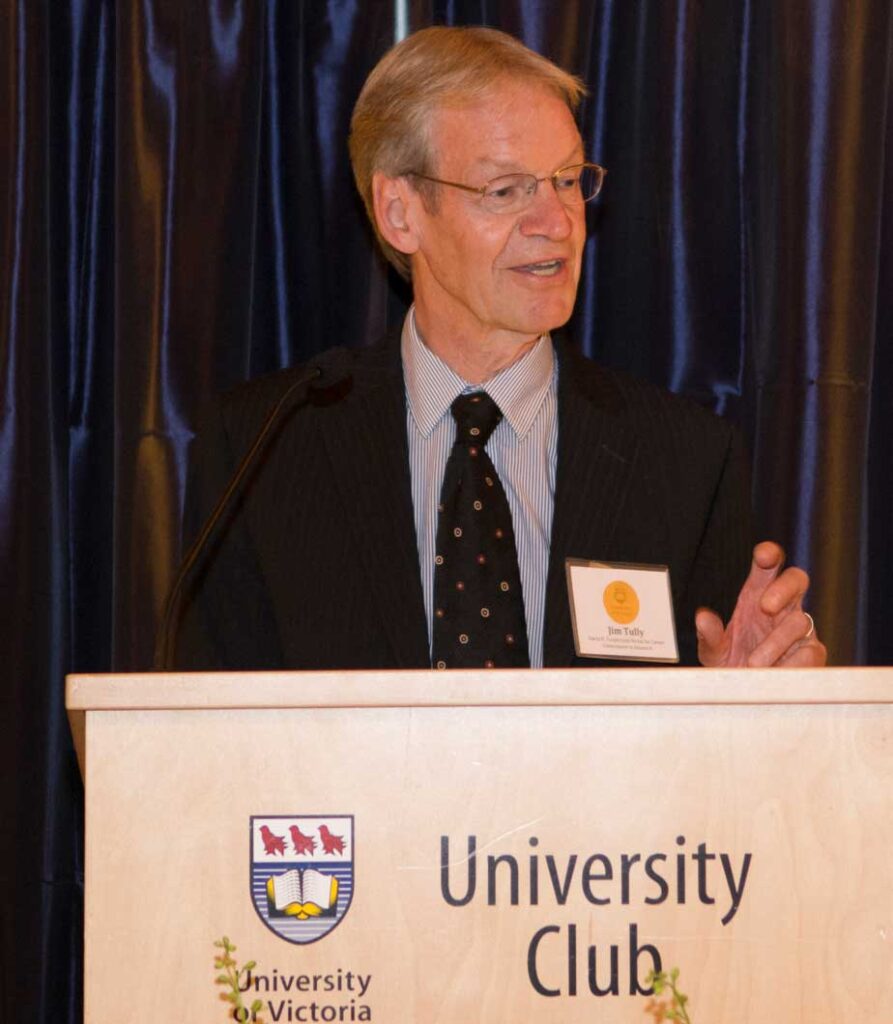





Topic:What does reconciliation look like when it is understood not as a completed task, but as an ongoing practice—here on earth, in our everyday lives?
with Dr. James TullyWebinar Date: April 22, 2026 / 12-1pm PT
In this reflective conversation, Dr. James Tully invites our audience to think carefully about reconciliation as a practice of living well together, rather than a policy outcome, legal framework, or symbolic gesture. Drawing from his chapter “Reconciliation Here on Earth,” Tully explores how reconciliation between Indigenous and non-Indigenous peoples is inseparable from our relationships with the living earth and with one another.
Rather than offering prescriptions or solutions, Tully turns our attention to the everyday practices—political, economic, social, and ecological—through which relationships are sustained, strained, or repaired. He reflects on what Indigenous teachings, ecological understandings, and traditions of non-violent democratic practice reveal about interdependence, responsibility, and limits in a time of overlapping social and environmental crises.
This conversation invites reflection on questions such as:
- What does it mean to practice reconciliation with others, rather than reconcile to existing systems?
- How do everyday habits of governance, consumption, and political life support—or undermine—reconciliation?
- What responsibilities arise when we understand ourselves as members of living, interdependent communities?
Through careful reflection and grounded examples, Tully invites audiences to move beyond reconciliation as a checklist or outcome and toward reconciliation as a lived practice—shaped within communities, institutions, and relationships with one another and the land.
Register Now
Use the code Resurgence2026 to get 20% off your purchase through University of Toronto Press, plus, get free shipping on orders over $40
Rather than offering prescriptions or solutions, Tully turns our attention to the everyday practices—political, economic, social, and ecological—through which relationships are sustained, strained, or repaired. He reflects on what Indigenous teachings, ecological understandings, and traditions of non-violent democratic practice reveal about interdependence, responsibility, and limits in a time of overlapping social and environmental crises.
This conversation invites reflection on questions such as:
- What does it mean to practice reconciliation with others, rather than reconcile to existing systems?
- How do everyday habits of governance, consumption, and political life support—or undermine—reconciliation?
- What responsibilities arise when we understand ourselves as members of living, interdependent communities?
Through careful reflection and grounded examples, Tully invites audiences to move beyond reconciliation as a checklist or outcome and toward reconciliation as a lived practice—shaped within communities, institutions, and relationships with one another and the land.
Register Now
Use the code Resurgence2026 to get 20% off your purchase through University of Toronto Press, plus, get free shipping on orders over $40

Resurgence and Reconciliation: Indigenous–Settler Relations and Earth Teachings
Edited by Michael Asch, John Borrows and James TullyBuy a Copy
Use the code TRC57 to get 20% off your purchase through UBC Press, plus, get free shipping on orders over $40